Vulnerability is a concept that links the relationship that people have with their environment to social forces and institutions and the cultural values that sustain and contest them. “The concept of vulnerability expresses the multi-dimensionality of disasters by focusing attention on the totality of relationships in a given social situation which constitute a condition that, in combination with environmental forces, produces a disaster”.
It's also the extent to which changes could harm a system, or to which the community can be affected by the impact of a hazard or exposed to the possibility of being attacked or harmed, either physically or emotionally: "we were in a vulnerable position".
“I think I learned more about acting from John than anybody.”
-Al Pacino
A Vibrant Vulnerable voice , who often played depressed characters. Slightly Subtle, but emotional performance. And a pair of Expressive eyes...made John Cazale one of the finest actors of his generation.
“I sometimes wonder if the inability to find one self makes one seek oneself in other people, in characters.”
-
John Cazale
( August 12, 1935 – March 12, 1978)
In John Cazale’s six year film career, he appeared in five films: The Godfather (1972), The Conversation (1974), The Godfather: Part II (1974), Dog Day Afternoon (1975) and The Deer Hunter (1978) – all nominated for Best Picture at the Oscars and still considered to be among the finest movies of all time.
Years after his death he appeared in a sixth feature film, El padrino: Parte III (1990) in archive footage. That film, like all of the films Cazale appeared in, was nominated for Best Picture.
John Cazale grew up in Revere, Massachusetts, an ocean-side town across the marshes and harbor from downtown Boston. He was the middle of 3 children, with an older sister and younger brother. His Italian father was a coal salesman who frequently traveled around New England and his Irish mother was a housewife. The family lived in a lovely Victorian home on Nahant Ave. just blocks from the beach.
On screen, Cazale could make audiences empathise with a weak and self-loathing character and make a dopey psychopath bankrobber seem loveable. With Cazale’s intensity and vulnerability, Directors would often cut to him for reaction shots to enhance the drama of the scene.
Friend Al Pacino requested him to audition for the role of Sal in Tarde de perros (1975). Director Sidney Lumet was, however, unsure, with Cazale not being anything like the real-life counterpart (the real Sal was eighteen, while Cazale was in his late thirties). Cazale immediately won over the part with the audition.
Director Michael Cimino agreed to film all of Cazale’s scenes in The Deer Hunter first. When the studio said they wanted Cazale off the movie because of his health, Cimino and Cazale’s then girlfriend, Meryl Streep threatened to walk away. The studio relented, but said they wouldn’t cover his insurance, so Robert De Niro fronted the bill.
That’s encouragement from your peers if I ever heard it. But what Cimino, Streep and De Niro all knew, and what we know now, is that by having John Cazale in the film, The Deer Hunter would only be better off.
His tragic scenes were often played to show the comic and his comic scenes revealed the tragic. His death at 42 from lung cancer left a great void in the acting world, as well as in the lives of friends and family who knew him – including his final devoted girlfriend, Meryl Streep.
" I remember John (Cazale) telling me once, while i´ve been away,.....this is after we´ve made Dog Day (Afternoon) and Godfather...coming to Manhattan and telling me ,..... oh man i have met the greatest actress in the history of the world!!! .....
I thought he is in love, how good can she be??
sure enough... it was -Meryl Streep- and he was right"
-Al Pacino
In the mid-1950s, Cazale graduated from Boston University where he studied acting alongside Olympia Dukakis. Their acting professor Peter Kass encouraged students to retain their personal experiences in their work. Cazale adopted the philosophy that finding a character meant finding that character’s pain. After moving to New York, Cazale made a living as a messenger alongside Al Pacino at Standard Oil. Eventually they ended up performing in an off-Broadway performance of Israel Horovitz's one-act play The Indian Wants the Bronx in 1968. Pacino played a young street punk who attacks Cazale’s newly emigrated Indian. The play and both actors earned Obie Awards that year. The two became good friends and would collaborate on 2 more plays and 3 films.
Casting Director Fred Roos attended another of Cazale’s Obie-winning performances in the play Line opposite Richard Dreyfuss – and brought him to the attention of Francis Ford Coppola. Cazale was soon cast as in The Godfather as Fredo, son of mob boss Don Corleone who gets passed over to run the operation in favor of his kid brother, Michael.
After the Godfather I & II, Cazale co-starred with Gene Hackman in Coppola's The Conversation followed by Sidney Lumet’s Dog Day Afternoon. In Lumet’s film, Cazale starred opposite Pacino as ill-equipped bankrobbers. Cazale ad-libbed a great comic line where his character is asked by Pacino which country he would like to escape to? and Cazale replies: “Wyoming.” Pacino carried on the scene with his old buddy without breaking up – though director Lumet almost ruined the take by laughing.
Cazale, unlike his characters, was a charismatic ladies man who once dated several pretty actresses, including Anne Wedgeworth. His co-star in the 1976 play Measure to Measure at The Public Theatre was 26-year-old Yale Drama graduate Meryl Streep. The chemistry was undeniable and the pair fell in love. She moved into Cazale’s tiny apartment on West 69th Street.
Not long into their relationship, Cazale began coughing up blood. Cazale was diagnosed with lung cancer which led to incurable bone cancer. The couple would only have two years together. Cazale’s last film before he died was The Deer Hunter. He had already been diagnosed with cancer and was unable to be insured by the studio. Streep said that she believes it was Robert Deniro who generously put up the bond so Cazale could do the film. Streep told the press, "He used to tease me about my perfectionism and called me 'the delicious robot'. He thought I acted perfectly but without the least feeling." Barely able to say his lines and limping, John bravely battled on to the end of filming his scenes.The Deer Hunter was released after his death. He did not live to witness Meryl's Oscar nomination for best supporting actress in the film.
Streep believed that Cazale would recover. Looking back, she remembered that final year as "a wonderful time" of intense closeness and communication. But she told an interviewer, "I was so close that I didn't notice the deterioration. John's death came as a shock because I didn't expect it."
"I know it was you, Fredo."
Al Pacino as Michael Corleone
Of the four actors who played Vito Corleone's children in the Godfather films, he was the only one not nominated for an Oscar for doing so. Al Pacino and James Caan were nominated for Best Supporting Actor for the first film. Al Pacino was nominated again, this time for Best Actor, for the second film, in which Talia Shire was nominated for Best Supporting Actress.
During the last few weeks of Cazale’s life, Streep moved into his hospital room - reading him the sports pages and trying to cheer him with comic impressions of TV newscasters, Zsa Zsa Gabor and bag ladies. Pacino later recalled that the image of Streep being completely devoted to his dying friend will always stay with him. Cazale’s brother described Streep as “an angel”. Streep and friends and loved ones were with Cazale at the end when he passed away at Sloan-Kettering Hospital on March 12, 1978.
Streep remembered her grief, "I'd walk from room to room in our apartment expecting to find John.”
“Three weeks after John's death," Meryl recalled to Ladies Home Journal, "a former girlfriend of John's materialized from California and reclaimed our apartment. It turned out that she and John had signed a lease together a few years earlier, but had never lived there together. After John died, my brother moved in with me. Then suddenly when this woman appeared, we had to leave. So within a period of three weeks, I not only lost John but our home."
Unable to stay on in Cazale's apartment, the shattered Streep needed new lodgings and her brother suggested that she stay in his sculptor pal Don Gummer’s apt. while Don traveled in Europe. A motorcycle accident made Don Gummer return early to Manhattan and he told Streep that she should stay with him. The pair became roommates, lovers, and finally spouses when they married on September 15, 1978. They have stayed married for over 30 years and raised 4 children.
"All I wanted to do was work with John for the rest of my life. He was my acting partner.
-AL PACINO
Pacino and Streep remembered Cazale in the HBO documentary, I Knew It Was You: Rediscovering John Cazale. ( You can watch the full film on VIMEO). “We would talk about the [acting] process endlessly and he was monomaniacal about the work,” Streep says in the film. “I think I was more glib and ready to pick the first idea that came to me. He would say, ‘There are a lot of other possibilities.’ That was a real lesson. I took that to heart. I always think about it.”
"One of the things that I love about the casting of John Cazale was that he had a tremendous sadness about him. I don't know where it came from; I don't believe in invading the privacy of the actors that I work with, or getting into their heads. But, my God — it's there — every shot of him. And not just in this movie, but in Godfather II also."
-Director Sidney Lumet
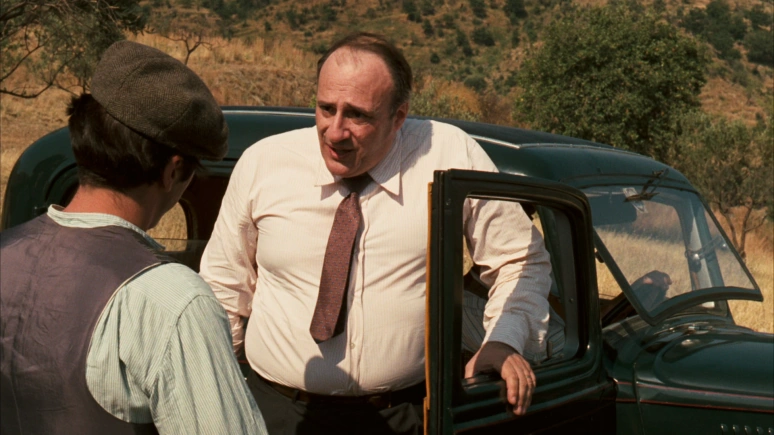
Marlon Brando as Vito Corleone and John Cazale as Fredo Corleone on the set of “The Godfather"
The Godfather is one of , if not , the greatest film of all time. There are many factors to make that bold statement . The Godfather is an experience, not a movie. I believe you need a little bread, a bit of red wine and some olive oil to flavor it. As if it were a exquisite meal, The Godfather must be enjoyed with patience.
And watched over and over again so it can be appreciated on its fullest. It is a work of ART.
THE MUSIC
What is a movie without images and the sounds. Every single film is an encapsulated moment of time, acting and conversations. The Godfather score is not just epic its monumental as a landmark in movie and human history.
Many have rejected to this day to watch the film because of what they think it´s the theme of the film. VIOLENCE AND MAFIA.
But it is so much more than that.
Nino Rota, an Italian composer who had a fruitful creative partnership with director Federico Fellini (Rota composed the scores for La Strada, Night of Cabiria, 8 1/2), was chosen as The Godfather‘s composer in order to give it a true Italian feeling. His score became an essential piece of the film, and its spare trumpet opening and lush love theme have become two of American cinema’s more famous pieces of music. Though nominated for an Oscar, Rota’s score was subsequently withdrawn, because part of the love theme had previously appeared (albeit in a more jaunty form) in the 1958 Italian comedy Fortunella. (Skip ahead to the 55-second mark in the video below to hear the original.)
THE DIRECTOR
Francis Ford Coppola is an American film director, producer and screenwriter. He was considered to be the central figure of the New Hollywood wave of filmmaking.
After directing The Rain People (1969), he won the Academy Award for Best Original Screenplay as co-writer, withEdmund H. North, of Patton in 1970. His directorial prominence was cemented with the release in 1972 of The Godfather, a film which revolutionized movie-making in the gangster genre, earning praise from both critics and the public before winning three Academy Awards—including his second Oscar (Best Adapted Screenplay, with Mario Puzo),Best Picture, and his first nomination for Best Director.
THE ACTOR
MARLON BRANDO
As Don Vito Corleone, Brando did not memorize most of his lines and read from cue cards during most of the film. He modeled his speech after mob boss Frank Costello who he saw testifying in a trial on TV.
When he auditioned for the part he stuffed his cheeks with cotton. During the filming of the movie he had a dentist make him a mouth piece to simulate that effect. Brando was playing pranks on the set all the time. One of them was when he was being carried into the house, up the stairs, on a stretcher. He put weights under him to make it much harder on the actors carrying him. Vito Corleone is the head of the Corleone crime family – the most powerful Mafia family in New York City. He is depicted as an orphaned Sicilian immigrant who builds a Mafia empire. Upon his death at the end of the novel, his youngest son,Michael, succeeds him as the head of the Corleone family. Vito has two other sons, Santino ("Sonny") and Frederico("Fredo" or "Freddie"), as well as a daughter, Connie, all of whom play major roles in the story. He also informally adopts Sonny's friend, Tom Hagen, who becomes the Family's consigliere.
In the years since The Godfather‘s release, critics have marveled at the cast that Francis Ford Coppola put together for the film. At the time, the Academy agreed, honoring each of the principal male players with Oscar nods. Al Pacino as Michael, Robert Duvall as Tom Hagen and James Caan as Sonny were all nominated for Best Supporting Actor.
Marlon Brando won the Academy Award for Best Actor, but he turned down the Oscar, instead sending a Native-American activist in traditional Apache dress to state his reason: an objection to the depiction of Native Americans in Hollywood films. It was a case of history repeating itself.
The last actor who had won an Oscar with a Coppola-penned script was Patton‘s George C. Scott, who became the first actor to turn down the award.
The CHARACTERS (The Corleone Family)
" Hey, listen, I want somebody good - and I mean very good - to plant that gun. I don't want my brother coming out of that toilet with just his dick in his hands, alright?"
-Santino (Sonny)Corleone
portrayed by James Caan
Santino 'Sonny' Corleone, Sr. was the eldest child of the Corleone family, known for his temper, compulsive aggression, and rash decisions.
" Thank you for the dinner and a very pleasant evening. Have your car take me to the airport. Mr Corleone is a man who insists on hearing bad news at once. "
-Tom Hagen
Thomas Feargal "Tom" Hagen portrayed by Robert Duvall
Consigliere to the Corleone Family, Hagen encountered the young Sonny Corleone and two older boys when they wandered into a dangerous alley in the Irish part of Hell's Kitchen, an alley in which Hagen was hiding.
Sonny took him home and persuaded his father to take him into the family. Although the Don never formally adopted him, thinking that this would have been an act of disrespect to Hagen's parents, Hagen thought of Vito Corleone as his true father. In many ways, Vito's adoption of the street urchin Hagen paralleled how Vito himself was taken in by Signor Abbandando when he was a child.
"Hey, Mike, are you sure about that? I mean, Moe, loves the business. He never said anything to me about sellin'."
-Fredo Corleone
portrayed by John Cazale
Frederico "Fredo" Corleone Fredo is characterized as the weakest and least intelligent of the three Corleone brothers, and therefore is often given the Corleone family's menial tasks. Fredo is the most obedient and dutiful of the Corleone children.
Born in 1920, to Vito and Carmela Corleone, Michael was deeply loved by his father, even prompting Vito to murder blackmailer DonFanucci so he could support Michael and the rest of his family. He became a bright and handsome young man and of all of Vito Corleone's children, Michael was said to be most like him in terms of intelligence, personality, and cunning.
portrayed by Al Pacino,
"Keep your friends close, but your enemies closer."―Michael Corleone
Constanzia 'Connie is the youngest child and only daughter of Don Vito Corleone and Carmela Corleone. She is the sister of Sonny,Fredo and Michael Corleone. Connie' Corleone-Rizzi
portrayed by Talia Shire, the sister of director Francis Ford Coppola.
Carlo Rizzi portrayed by Gianni Russo.
He befriends Sonny Corleone, through whom he meets Sonny's sister, Connie, in 1941 at a surprise birthday party for Sonny's father Vito They are married in 1945; Vito dislikes Connie marrying a small-time criminal, and is also displeased by the fact Rizzi is not a full-blooded Sicilian; his mother was from northern Italy. He only grants Connie's hand in marriage on condition that they have a traditional Sicilian wedding. Rizzi is thrilled by the prestige that comes with marrying a member of the Corleone crime family. However, Vito instructs consigliere Tom Hagen to forbid Carlo any significant knowledge of the Family's workings, and only to "give him a living". He is given a small sports book to operate under the family's supervision, though he proves incompetent at the job.
CONNIE´S WEDDING
The wedding reception of Connie and Carlo Rizzi was inspired by the wedding celebration of Bill Bonanno, son of New York boss Joe Bonanno, and Rosalie Profaci, niece of New York boss Joe Profaci.
Katerine "Kay" Corleone Adams portrayed by Diane Keaton
In 1945, while attending Dartmouth College, Kay met and fell in love with Michael, also a student there. As a non-Italian, she is an outsider to the Corleones' world, and symbolizes Michael's initial desire to live a more Americanized life, separate from his family's. When she and Michael attend his sister, Connie's wedding, they sit at a table away from the family. In the book, the other guests notice how Kay's manner is freer than expected from an unmarried woman.
Kay is initially unaware that the Corleones are a powerful Mafia family. In the novel, Michael at first attempts to explain his father to her by depicting him as a somewhat unethical business man. When the famous singer Johnny Fontane arrives at Connie's wedding reception, Kay, a fan, is surprised that Michael knows him, then stunned when he relates how his father "helped" his godson Johnny's early career by threatening to kill his manager unless he released Fontane from his contract.
John "Johnny" Fontane, portrayed by Al Martino, Fontane is a famous crooner and occasional film star in the vein of Frank Sinatra. He is also the godson of Vito Corleone, the head of a major Mafia crime family. The Corleone family intervenes four times to aid his career.
The first, years before the novel's and film's main time frame, Vito used violent persuasion (an "offer he can't refuse") to buy out Fontane's ironclad contract with a big bandleader; after the bandleader declines Vito's first offer to buy out the contract, he orders his personal assassin Luca Brasi to place a gun to the man's forehead, telling the bandleader that either his signature or his brains would be on the contract.
The TRUSTED MEN
"Leave the gun. Take the cannoli."
―Peter Clemenza
PORTRAYED BY Richard S. Castellano,
Clemenza acts as an uncle to Michael, teaching him how to cook, as well as how to properly act out an assassination. Clemenza also confided in Michael and told him that Vito was proud that he joined the Marines and became a war hero.
Clemenza spagetti’s sauce
ingredients:
2 tablespoons olive oil 2 cloves garlic, minced 2 large cans of tomato sauce 1 tablespoon tomato paste 3-4 sausage (cooked) 5 meatballs (cooked) 1/4 cup sugar A splash of red wine
Method: Heat the oil over low heat in a large pot Add the garlic and fry lightly for a few minutes (do not let the garlic burn) Add the tomato puree and tomato paste Cook for about 5 minutes, stirring continuously so as to achieve a relatively smooth consistency Add the sausages and meatballs and stir until the meat is coated by the sauce Add a splash of red wine, then sugar to taste (no more than 1/4 of a cup) Always keep the low heat and let simmer for a minimum of 20 minutes, stirring occasionally Serve over cooked pasta
"I believe in America. America has made my fortune."
―Amerigo Bonasera
PORTRAYED BY Salvatore Corsitto , Bonasera was a longtime acquaintance of Vito Corleone. However, unlike many of the other residents of the Corleones' Little Italyneighborhood, he was unwilling to accept Don Corleone's friendship, believing that his newfound paradise would be jeopardized if word got out that he was in debt to the Mafia. Despite this, Corleone's wifeCarmela became godmother to Bonasera's daughter Maria.
"Barzini's people chisle my territory and we do nothing about it. Pretty soon there won't be anyplace in Brooklyn that I can hang my hat. "
-Salvatore Tessio
PORTRAYED BY Abe Vigoda Tessio was initially the more trusted of the two capos during the war with the Five Families (having to chose whether the traitor in the family was Clemenza or Paulie Gatto), and was issued the task of assassinating Bruno Tattaglia and helping Michael Corleone with the assassination of Virgil Sollozzo.
"Don Corleone, I am honored and grateful that you have invited me to your home on the wedding day of your daughter. And may their first child be a masculine child."
-Luca Brasi
Luca Brasi was one of Vito Corleone's most trusted enforcers. Fluent in Italian and able to handle himself in any fight, he had a dark reputation among the underworld as a savage killer.
portrayed by Lenny Montana, an ex-wrestler and body guard for real-life mobster Joe Colombo. Director Francis Ford Coppola saw Montana one day when Colombo visited the set and immediately cast him as Brasi. His experience as a pro wrestler helped him quite a bit during the scene when he died. Lots of practice at being pinned in the ring helped.
Paulie Gatto was one of Clemenza's made men, his personal right hand man and personal chauffeur to Vito Corleone, a job he shared with the Don's son Fredo.
portrayed by Al Lettieri
Virgil "The Turk" Sollozzo was a top narcotics man, who became associated with the Tattaglia family.
Known as the Turk because he had a nose like a Turkish scimitar, and also listed as being very good with a knife, Sollozzo had already gained a reputation as a top narcotics man with poppy fields in Turkey and laboratories in Sicily and Marseilles.
"What are you worried about? If I wanted to kill you you'd be dead already."
-Virgil Sollozzo:
In the early 1930s, Barzini became one of the Capos in Giuseppe Mariposa's organization, along with his brother Ettore. He began to grow unhappy with Mariposa after Mariposa murdered his friend "Tits" merely on suspicion of treachery, and after Barzini's attempt to assassinate Vito Corleone at a parade turned into a massacre, he began to see the tide turning and betrayed his boss Giuseppe Mariposa for Vito Corleone. After Mariposa's death, Barzini took over the remnants of his organization and presided as head of one of New York's Five Families. He was generally reckoned as the second most powerfulMafia chieftain in both New York and the nation, behind only Vito Corleone.
“Times have changed,”
-Don Barzini
Don Barzini portrayed by Richard Conte says, sitting at the table’s head, an orange visible in the fruit bowl before him . All members of the commission want to get into narcotics makes it imperative to embrace, so Corleone must share his power. Vito’s grievance about narcotics as a parasite that will destroy the business is dismissed without much conversation.Barzini rashly nods away Vito’s argument, saying that “surely he can present a price for service” as after all, “we are not Communists.”
In a pivotal scene in the novel and film, Fredo is with his father when assassins working for drug kingpin Virgil Sollozzo attempt to gun down Don Corleone in the street. Fredo, terrified, drops his gun, failing to return fire. He sits on the curb next to his severely wounded father, weeping. In the novel, Fredo is sickened after witnessing his father being shot, going into shock.
To aid Fredo's recovery and protect him from possible reprisals, Sonny sends his younger brother to Las Vegas under the protection of Don Anthony Molinari of San Francisco. While in Las Vegas, Fredo is also learning the casino trade and becomes acquainted with former hitman Moe Greene , who runs a major Vegas hotel that the Corleone family bankrolled. When Fredo's womanizing starts affecting business, Greene slaps him in public.
For a character as large and powerful as Sonny, an ordinary death wouldn’t do him justice. So Francis Ford Coppola took inspiration from the finale to Arthur Penn’s Bonnie and Clyde. In that scene — one of the first in which intensely brutal violence was seen in a popular film — Warren Beatty and Faye Dunaway are riddled with hundreds of bullets in a roadside ambush.
Sonny’s death at the tollbooth of the Long Beach Causeway is a study in pacing and anticipation. There are little cues, such as the tollbooth operator dropping the coin, that give away the outcome, but there’s no time. When a half-dozen men rise up with tommy guns, James Caan exudes the horrific pain of being hit by hundreds of bullets as 400-plus squibs attached to Caan’s body, the car and the tollbooth exploded on cue. The scene required three days, and the technicians and explosives cost $100,000, a significant amount for a film with a budget of about $6.5 million.
After Sonny's assassination, Vito chooses Michael as his successor of the Corleone Family. This creates a lasting rift between the two surviving brothers.
When Michael learns that Greene slapped Fredo, he is angered and confronts Greene, but is also dismayed that Fredo has fallen under Greene's influence. Michael berates Fredo for openly taking sides against the family during a meeting with Greene, warning him never to do so again.
‘Do you know who I am?’
- Moe Greene
Moe Greene portrayed by Alex Rocco, is credited in the movie with helping to build Las Vegas. He's clearly an analogue for
Bugsy Siegel, the Jewish mobster who was an associate of Meyer Lansky's (as Greene was with Hyman Roth), and who is credited with putting Las Vegas on the map by building the Flamingo, the hotel/casino/nightclub that was the model for every modern-day resort on the Strip. In the film, Greene is famously shot to death through the eye at his casino for having moved against the Corleones. In real life, Siegel was shot over the cost overruns of the Flamingo, and he was killed by four shots from a sniper while sitting on the living room couch of his girlfriend's home in Beverly Hills.
When Vito's son Michael Corleone murdered drug lord Virgil Sollozzo and corrupt NYPD Captain Mark McCluskey in the late 1940s, he was immediately dispatched to Sicily and placed under Tommasino's care. Tommasino ensured that Michael was safe from both the police and his enemies, and put him up in the house of his uncle Dr. Taza.
Born and raised in the Sicilian village of Corleone, Tommasino first got in touch with Vito while Vito was expanding the operations of hisGenco Pura Olive Oil Company. The two cut a deal in which Vito would distribute Tommasino's olive oil. When Vito returned to the village of Corleone in 1922 looking to exact revenge on Don Ciccio for the latter's role in the murder of his parents and brother, Tommasino assisted him in his scheme, seeking Don Ciccio's role for himself.
They went to Don Ciccio's estate, ostensibly to get his blessing for their venture. They succeeded in killing Don Ciccio, but in the midst of their escape, Tommasino was severely wounded by a blast from a lupara shotgun, fired by one of Don Ciccio's bodyguards. The blast crippled him from the waist down, and, though he could stand for short periods, he was mostly confined to a wheelchair for the rest of his life.
Despite this, Tommasino succeeded Don Ciccio as the local MafiaDon of the town of Corleone, and maintained his strong friendship with Vito.
When Vito's son Michael Corleone murdered drug lord Virgil Sollozzo and corrupt NYPD Captain Mark McCluskey in the late 1940s, he was immediately dispatched to Sicily and placed under Tommasino's care. Tommasino ensured that Michael was safe from both the police and his enemies, and put him up in the house of his uncle Dr. Taza.
MICHAEL´S WEDDING
Apollónia Vitelli was born in the hills around Corleone, Sicily. Apollonia was the daughter of a Greek mother and a Sicilian father, both of whom were incredibly protective of her and never wanted her heritage to be confused. She was the third child, having two older brothers. Apollonia grew into a very beautiful young woman.
When Michael was readying himself for a usual excursion with his bride, Apollonia wished to impress her husband that she taught herself how to drive. In starting the car, she died when she ignited a car bomb intended for Michael. The attack was orchestrated by Michael's trusted bodyguard, Fabrizio, who was paid off by the Barzini family from New York.
Her death made Michael a man with an uncontrollable thirst for revenge, which would set a chain reaction of events in motion. Ultimately, Michael's attitude he gained when he was widowered would cause the self-destruction of the Corleone family.
"Today, I will settle all family business."
―Michael Corleone
Trivia FactS
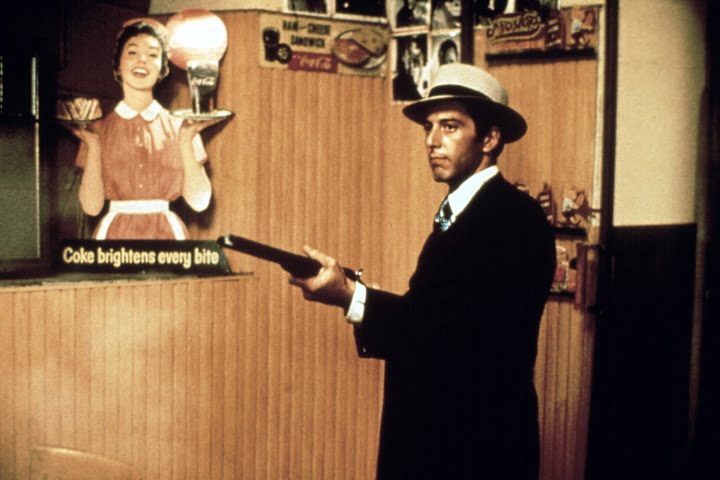
In a scene cut from the film, Michael comes back to America to track down Fabrizio, his former Sicilian bodyguard and the man responsible for the death of his wife Apollonia. Finding him in a pizza parlor, Michael blows him away with a shotgun. Though the scene was never used, the still (with Michael in a white hat) was disseminated widely during the film’s promotion.
Immediately following his daughter’s wedding, Don Corleone takes his sons to visit Genco Abbandando, his dying consigliere, in the hospital. Though cut from the film, this scene sheds light on a seemingly throwaway line later uttered by Sonny to Tom Hagen: “If I had a wartime consigliere, a Sicilian, I wouldn’t be in this shape! Pop had Genco — look what I got.”
When Sonny (Caan) fought his brother-in-law Rizzo (Gianni Russo), Caan broke two of Russo's ribs when he hit him with the trash can. Caan didn't like Russo and some think that is why he took it so far.
"The Super "was a 1972 United States comedic television series starring Richard S. Castellano which centers on the superintendent of an apartment building in New York City. The show aired between June 21, 1972, and August 23, 1972.
The surprise factor is the Cast Richard S. Castellano....Joe Girelli (CLEMENZA) Ardell Sheridan....Francesca Girelli ( CLEMENZA´S WIFE ) Bruno Kirby....(Anthony Girelli YOUNG CLEMENZA in The Godfather part II)
Even before Mario Puzo’s novel was published, many assumed that the Johnny Fontane subplot was loosely based on the real-life Frank Sinatra drama when he was trying to earn a role in From Here to Eternity. Puzo successfully avoided running into Sinatra until one night in Los Angeles in 1970, when a friend of Puzo’s insisted on introducing him to Sinatra. After Sinatra refused to meet Puzo and the friend broke down in tears, Puzo uttered, “It’s not my fault.” Sinatra thought he was apologizing for the Fontane character in the book and began to scream at Puzo. The incident made the news and became a public-relations disaster. Later, when Francis Ford Coppola signed on as director, he had a run-in with Sinatra that was more cordial.The popular singer was originally cast as the Sinatra-esque Johnny Fontane. He dropped out, attributing his pride in being Italian, though he would later state that it was all about the money. The Fontane role is much, much bigger in Mario Puzo’s source material.
"Barzini will move against you first. He'll set up a meeting with someone that you absolutely trust – guaranteeing your safety. And at that meeting, you'll be assassinated."
―Vito Corleone
to Michael Corleone
According to Harlen Lebo’s The Godfather Legacy, “by 1972, when The Godfather became box office champion, only two other films had earnings that approached it: Gone with the Wind and The Sound of Music … In the twenty years that followed The Godfather, fifty-eight movies would surpass it in earnings.” Or as producer Al Ruddy put it, “The Godfather brought in the era of the blockbusters, where they’re looking for the $100 million movie, the home run, the tent-pole attraction to build a schedule on. This had never happened before.”
Although many films about gangsters preceded The Godfather, Coppola's heavy infusion of Italian culture and stereotypes, and his portrayal of mobsters as characters of considerable psychological depth and complexity was unprecedented.

 In John Cazale’s six year film career, he appeared in five films: The Godfather (1972), The Conversation (1974), The Godfather: Part II (1974), Dog Day Afternoon (1975) and The Deer Hunter (1978) – all nominated for Best Picture at the Oscars and still considered to be among the finest movies of all time.


 Not long into their relationship, Cazale began coughing up blood. Cazale was diagnosed with lung cancer which led to incurable bone cancer. The couple would only have two years together.
 Cazale’s last film before he died was The Deer Hunter. He had already been diagnosed with cancer and was unable to be insured by the studio. Streep said that she believes it was Robert Deniro who generously put up the bond so Cazale could do the film. Streep told the press, "He used to tease me about my perfectionism and called me 'the delicious robot'. He thought I acted perfectly but without the least feeling." Barely able to say his lines and limping, John bravely battled on to the end of filming his scenes.The Deer Hunter was released after his death. He did not live to witness Meryl's Oscar nomination for best supporting actress in the film.


 “Three weeks after John's death," Meryl recalled to Ladies Home Journal, "a former girlfriend of John's materialized from California and reclaimed our apartment. It turned out that she and John had signed a lease together a few years earlier, but had never lived there together. After John died, my brother moved in with me. Then suddenly when this woman appeared, we had to leave. So within a period of three weeks, I not only lost John but our home."